
As Ebonyi State gradually approaches the 2027 governorship election, familiar political arguments over zoning, succession, endorsements and the influence of outgoing administrations are once again dominating conversations across the state.
The unfolding debate has revived memories of previous political disagreements, particularly the 2015 transition from Martin Elechi to David Umahi and the 2023 succession process that produced Governor Francis Nwifuru.
Although the personalities and political circumstances have changed, some of the arguments being advanced today bear striking similarities to those that shaped previous governorship transitions.
This raises an important question: Has Ebonyi learnt from its political history, or is the state gradually returning to familiar political battles?
The 2015 governorship transition remains one of the most contentious episodes in Ebonyi’s political history.
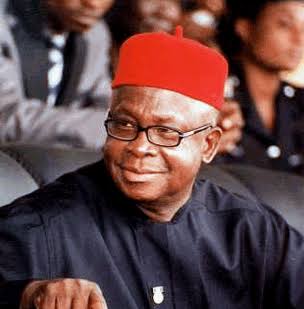
Martin Elechi, who governed the state from 2007 to 2015, and his then deputy, David Umahi, became embroiled in disagreements over the succession process and the conduct of the Peoples Democratic Party’s primaries.
The disagreement extended beyond the election, eventually developing into a public exchange of accusations between the former governor and his successor.
In a letter reproduced by The Guardian on July 3, 2016, Elechi revisited the controversy surrounding the PDP ward congresses of November 2014, alleging irregularities in the delegates’ list used for the party’s governorship primary.
He wrote:”I opposed the falsification of the delegates’ lists from the Ward Congresses held on 1st day of November, 2014.”
Elechi also alleged that the handling of the party congresses contributed to the emergence of Umahi as the PDP governorship candidate against the position he supported.
The former governor subsequently made his disagreement with Umahi’s succession explicit.
In a report published by The Nation on April 2, 2016, Elechi was quoted as saying:
“I refused to support him in succeeding me because he lacked the qualities of allowing opposing views to thrive and accommodating dissenting entities.”
The disagreement demonstrated how political relationships within an outgoing administration could deteriorate when competing interests emerged over succession.
It also left behind a significant historical reference point for subsequent political transitions in the state.
Seven years after the Elechi-Umahi disagreement, another succession controversy emerged as Umahi prepared to leave office.
In April 2022, Umahi publicly endorsed the then Speaker of the Ebonyi State House of Assembly, Francis Nwifuru, as his preferred successor.
The endorsement generated opposition from some APC stakeholders, who questioned the process and demanded greater participation in the selection of the party’s governorship candidate.
According to a report by Punch on April 24, 2022, the endorsement came amid disagreements among APC stakeholders, particularly from parts of Ebonyi North.
Umahi’s media aide, Francis Nwaze, subsequently defended the governor’s decision.
In a statement reported by The Nation on April 28, 2022, Nwaze said:
“Nwifuru’s endorsement was borne out of popular opinion…”
He further explained that the endorsement did not prevent other interested aspirants from exercising their democratic rights.
However, the opposing camp maintained its reservations.
On May 4, 2022, Vanguard reported that a group of APC stakeholders, identifying themselves as Legacy APC members, warned against what they described as an attempt to impose Umahi’s preferred candidate on the party.
Chief Haroun Ajah, speaking for the group, argued:”We believe that only a direct primary where the aspirants would test their popularity could restore the confidence of APC members in the party’s candidates and not the choice of one man who wants to pitch Ebonyi APC against the people.”
Despite the disagreements, Nwifuru eventually emerged as the APC candidate and won the 2023 governorship election.
The episode once again brought the question of political influence, party participation and succession arrangements to the forefront of Ebonyi politics.
The emerging political conversation ahead of the 2027 governorship election appears to be reopening some of these historical questions.
On October 20, 2026, political leaders and stakeholders from across Ebonyi State gathered at the Christian Ecumenical Centre in Abakaliki for the Ebonyi State Leaders and Stakeholders’ Political Summit.
The summit endorsed Nwifuru for a second term and reaffirmed the governorship rotation arrangement among the state’s three senatorial districts.
Participants argued that Ebonyi North, which produced the current governor, should be allowed to complete an eight-year tenure before power moves to Ebonyi Central in 2031 and subsequently to Ebonyi South in 2039.
The endorsement followed a motion moved by Senator Onyekachi Nwebonyi and was adopted through a unanimous voice vote.
The summit’s communiqué stated:”In the interest of equity, fairness, mutual trust and the preservation of peaceful coexistence…”
It consequently resolved that Ebonyi North should complete the governorship in the 2027 electoral cycle.
The gathering was attended by prominent political figures, including former governors Sam Egwu, Martin Elechi and David Umahi, as well as former Senate President Anyim Pius Anyim.
A November 7, 2026, THISDAY report on the emerging governorship contest highlighted continuing disagreements between those supporting the rotation arrangement and others who argue that competence and capacity should remain central to the electoral process.
The report also quoted an unnamed stakeholder defending the existing arrangement:”If we destroy the process, our children will suffer for it.”
The statement reflects the argument that political agreements and established understandings should not be discarded whenever they become inconvenient to competing political interests.
On the other hand, those questioning the zoning arrangement raise concerns about whether an informal political understanding should determine who can contest for the state’s highest political office.
One striking similarity across the 2015, 2023 and 2027 political conversations is the question of who determines the next governor.
In 2015, disagreements over the PDP primaries and Elechi’s position on his successor exposed divisions within the outgoing political establishment.
In 2026, the endorsement of Nwifuru for another term at the stakeholders’ summit has brought zoning, political continuity and the interpretation of the state’s rotational arrangement back into public discussion.
These developments are not identical, but they reveal a recurring tension between political leadership, party stakeholders, succession arrangements and democratic competition.
Another important distinction is that the rotation arrangement is a political understanding whose interpretation remains contested. The fact that successive governors have come from different senatorial districts does not, by itself, establish that every stakeholder agrees on its precise terms or that it is a legally binding restriction on electoral participation.
The experiences of 2015 and 2023 offer important lessons for the state’s political actors.
The disagreements between Elechi and Umahi showed that political succession disputes can outlive the election that produces a new administration.
Similarly, the controversy surrounding Umahi’s endorsement of Nwifuru demonstrated that a preferred successor may still face resistance from stakeholders who believe the selection process should accommodate competing interests.
Now, with another election approaching, the challenge is how to balance political continuity, zoning, fairness and the constitutional rights of aspirants and voters.
The people of Ebonyi should not be reduced to spectators in conversations about their political future. Political endorsements and stakeholder resolutions may shape party arrangements, but the democratic process must ultimately accommodate the rights of citizens and the requirements of the law.
The question is not simply whether Nwifuru should return for another term or whether another political arrangement should prevail. It is whether the process through which such decisions are made will command sufficient legitimacy and respect among the people.
From Elechi’s disagreement with Umahi in 2015 to the resistance that greeted Umahi’s preferred successor in 2022, Ebonyi’s political history contains several reminders of how contentious the question of succession can become.
The current debate may represent another chapter in that history, but its outcome is not predetermined.
Will political stakeholders find common ground before the 2027 election, or will competing interpretations of zoning and political influence once again deepen divisions?
Will the lessons of previous administrations encourage a more inclusive political process, or will familiar disagreements return under different political circumstances?
Ebonyi has witnessed political transitions before. The question now is whether its political leaders will approach the next one differently.
History may not repeat itself in exactly the same way, but the similarities are already prompting questions that the state’s political actors cannot afford to ignore.
On this History Thursday, we revisit stories that define our roots and affirm our identity. From past achievements to enduring legacies, these moments remind us that Ebonyi’s history is rich, resilient, and worth telling—again and again.